OEM vs ODM for EMS Products: Which Model Is Right for Your Brand?
OEM vs ODM for EMS Products: Which Model Is Right for Your Brand?
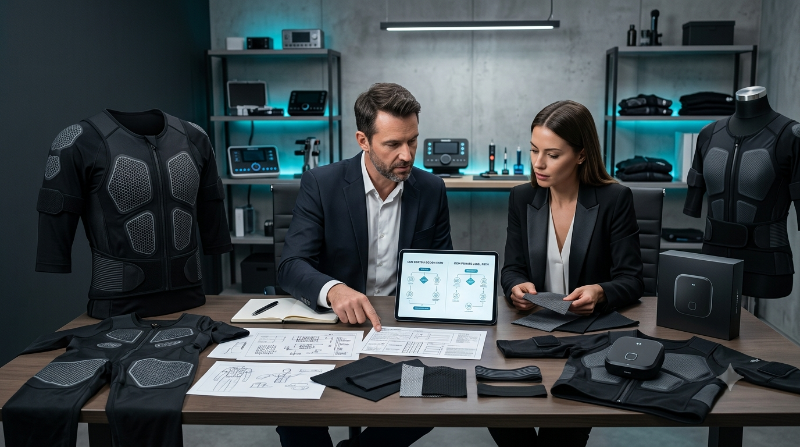
Choosing between OEM and ODM sounds like a factory detail. But I have seen this choice decide product speed, cost, brand control, and long-term profit.
For EMS products, I choose OEM when I already have a clear product design and want full brand control. I choose ODM when I need a faster launch based on an existing manufacturer design. The right model depends on my budget, timeline, technical ability, and brand strategy.
In the EMS training industry, this decision is not only about a logo. It affects the EMS suit structure, electrode layout, control box design, software interface, packaging, manuals, certificates, and after-sales responsibility. A wrong decision may create hidden cost later.
I do not look at OEM and ODM as good or bad. I look at them as two different paths. One path gives me more control. The other path gives me more speed. If I understand the difference early, I can avoid paying for the wrong development model.
What Is the Difference Between OEM, ODM, and EMS?
Many buyers mix these terms together. That creates confusion during sourcing, quotation, sample development, and product launch.
OEM means the manufacturer produces according to my design or requirements. ODM means the manufacturer already has a product design that I can customize and sell under my brand. EMS can mean Electrical Muscle Stimulation products, or Electronics Manufacturing Services in supply chain language.
In this article, EMS mainly means Electrical Muscle Stimulation products, such as EMS suits, EMS vests, EMS device boxes, electrode systems, and EMS training software. But in global manufacturing, EMS can also mean Electronics Manufacturing Services. That second meaning refers to companies that manufacture, test, and sometimes repair electronic products for other brands.
This is why I always clarify the term before I talk with a supplier. If I say “EMS product,” I may mean an EMS training suit. If an electronics factory says “EMS service,” it may mean electronics assembly. These two meanings can overlap because EMS training products include electronics. But they are not the same topic.
How I Separate the Terms
| Term | What It Means | How It Applies to EMS Training Products |
|---|---|---|
| OEM | Original Equipment Manufacturing | I give product requirements, and the factory makes it for my brand |
| ODM | Original Design Manufacturing | The factory has a ready product design, and I customize it |
| EMS | Electrical Muscle Stimulation | The fitness technology used in suits, vests, and training systems |
| EMS Service | Electronics Manufacturing Services | Electronics production service for device boxes or control boards |
For an EMS training brand, the most common choice is not pure electronics EMS service. It is usually OEM or ODM cooperation with a specialized EMS equipment manufacturer. I care more about whether the supplier understands electrode placement, suit fit, stimulation channels, battery box reliability, software connection, and user safety.
I also check product responsibility early. The FDA page on electronic muscle stimulators reminds me that electrical muscle stimulators need proper design, labeling, and instructions. So I do not treat EMS products like simple sportswear. A suit may look like clothing, but the full system includes body contact, electrical output, software control, and user training.
This is also why a focused supplier matters. Loksource focuses on EMS training equipment and apparel, including dry EMS suits, wet EMS suits, energy boxes, software connection, and OEM customization. That focus is useful because I do not want to explain the basic category to a general clothing factory.
Is EMS the Same as OEM?
This question appears often because the letters are close, and the manufacturing terms can be confusing.
No, EMS is not the same as OEM. EMS describes the product technology in this article, while OEM describes a manufacturing cooperation model. I can have an OEM EMS product, an ODM EMS product, or a standard EMS product from a supplier.
I think this is the easiest way to understand it. EMS tells me what the product does. OEM tells me how the product is made for my brand. For example, if I want a black dry EMS suit with my own logo, my own packaging, and some custom software settings, I may ask a manufacturer for OEM service. The final product is still an EMS product. But the business model is OEM.
ODM is different. If the manufacturer already has a dry EMS suit model and a matching device box, I may use that design as the base. I can change the logo, packaging, colors, manual, and maybe some functions. That is closer to ODM. I do not start from zero. I use the manufacturer’s existing design and make it fit my brand.
A Simple Way I Explain It
| Question | My Simple Answer |
|---|---|
| What is EMS? | The training technology or product category |
| What is OEM? | A manufacturing model based on my requirements |
| What is ODM? | A manufacturing model based on the supplier’s existing design |
| Can EMS be OEM? | Yes, an EMS product can be produced under OEM service |
| Can EMS be ODM? | Yes, an EMS product can be launched through ODM customization |
This difference matters in real sourcing. If I tell a supplier “I need OEM,” but I only want to add my logo to their standard suit, the supplier may actually treat it as ODM or private label. If I say “I need ODM,” but I expect a totally unique electrode system and new software logic, the supplier may need to charge more because that is closer to OEM development.
I also pay attention to compliance responsibility. If I sell in Europe, I may need CE-related documentation, and the European Commission CE marking page explains that manufacturers have responsibilities such as conformity assessment, technical files, and declaration of conformity. For electrical and electronic parts, I also check RoHS because the European Commission RoHS Directive page covers restricted hazardous substances in electrical and electronic equipment.
So when I choose OEM or ODM for EMS products, I am not only choosing a production style. I am also choosing how much responsibility, documentation, testing, and technical control I need to manage before I sell.
Which Is Better, ODM or OEM?
Many new brands want a direct answer. I do not think there is one answer for every business.
ODM is usually better when I need speed, lower development cost, and a proven base product. OEM is usually better when I need a unique product, stronger brand control, and long-term differentiation.
If I am launching my first EMS product line, ODM may be the safer path. I can use a mature EMS suit model, test samples faster, and enter the market with lower development risk. This is helpful when I do not yet know which product style will sell best. I can test dry EMS suits for home users, wet EMS suits for studio clients, or split EMS suits for different body types.
OEM becomes more attractive when I already understand my market. If I know my users need a specific suit structure, a special electrode layout, a different battery box design, or a unique software interface, I may need OEM. This path takes more time and more communication, but it can help me create a product that competitors cannot copy easily.
OEM vs ODM Decision Table
| Factor | ODM May Be Better | OEM May Be Better |
|---|---|---|
| Launch speed | I want to launch fast | I can wait for development |
| Budget | I want lower starting cost | I can invest more upfront |
| Product design | I can accept a base model | I need a unique structure |
| Brand control | I need basic customization | I need deeper control |
| Technical ability | I need supplier guidance | I have clear specifications |
| Market stage | I am testing demand | I already know my customers |
| Differentiation | Packaging and branding may be enough | Product uniqueness matters more |
For EMS products, I also think about the buyer type. A distributor may begin with ODM because the goal is to test local demand. A premium EMS studio chain may prefer OEM because it wants a different user experience. A beauty equipment brand may need custom packaging and wet EMS vest options. A home fitness brand may need a dry suit system with simple operation and clear user instructions.
I also think about intellectual property. If I use ODM, the supplier may still own the core design unless the contract says otherwise. If I use OEM, I may own more of the design work, but only if the agreement is clear. The WIPO business IP page is a useful reminder that intellectual property can create business value and reduce risk when I manage it early.
So my answer is simple. ODM is better for speed and lower risk. OEM is better for control and differentiation. The best model is the one that matches my current business stage.
How Should I Choose OEM or ODM for EMS Suits and Devices?
The right model depends on what I am really trying to build. I should not choose only because one word sounds more professional.
I choose the EMS production model by checking my target market, product uniqueness, budget, launch timeline, compliance needs, software needs, and the level of support I expect from the manufacturer.
When I help plan an EMS product line, I start with the market, not the factory. I ask who will use the product. A home user needs simple setup, comfort, and safe instructions. A gym needs durability and fast operation. A beauty salon may care about client comfort, body-shaping positioning, and easy cleaning. A rehabilitation-related buyer may need more professional use guidance and careful claim control.
Then I connect the market need to the product model. If the need is common, ODM can work well. For example, a standard dry EMS suit with private label packaging may be enough for a new brand. If the need is special, OEM is better. For example, a studio chain may want a unique suit pattern, stronger wet contact design, custom sizing, or a software flow made for trainers.
My EMS Product Model Checklist
| Business Question | What It Tells Me |
|---|---|
| Do I need a fast launch? | ODM may be better |
| Do I need unique hardware? | OEM may be better |
| Do I need custom software? | OEM or deep ODM may be needed |
| Do I have enough budget for development? | OEM becomes more realistic |
| Do I know my user group clearly? | OEM can match the market better |
| Do I only need logo and packaging? | ODM is usually enough |
| Do I need certificates for my market? | I must check documents before either model |
For EMS suits, I also check whether the supplier offers both dry and wet systems. Dry EMS suits may be easier for home training users and beginners. Wet EMS suits may provide stronger contact and may fit gyms, beauty centers, and professional training locations. A manufacturer that understands both options can help me avoid choosing the wrong system.
Loksource can support dry EMS suits, wet EMS suits, EMS device boxes, software connection, and OEM service from sample development to mass production. This matters because an EMS brand often changes direction after sample testing. I may begin with a standard model, then request a different zipper, electrode layout, size range, packaging style, or user manual. A flexible manufacturer makes that process easier.
What Should I Protect Before Starting OEM or ODM Production?
Many brands focus on samples first. I think the agreement is just as important as the sample.
Before OEM or ODM production, I would protect product specifications, logo use, packaging files, software requirements, quality standards, certification documents, ownership of custom work, after-sales terms, and confidentiality.
A clear agreement reduces confusion. It also helps both sides work faster. I do not want a supplier to guess what I mean by “high quality.” I want measurable points. I want the suit material confirmed. I want the electrode zone layout confirmed. I want the control box model confirmed. I want battery, charging, packaging, manual language, logo position, size chart, and inspection standard written down.
For ODM, I would ask what parts of the product I can customize. I would also ask what parts are locked because they belong to the manufacturer. If I pay for special packaging or a unique color, I want to know whether the supplier can show the same style to another customer. If I pay for software changes, I want to know who owns those changes.
What I Put Into The Agreement
| Area | What I Confirm |
|---|---|
| Product specification | Suit type, device box, size, material, and electrode layout |
| Branding | Logo position, packaging design, and manual style |
| Compliance | CE, RoHS, battery documents, and model matching |
| Software | Interface, language, connection, and update responsibility |
| Quality control | Inspection rules, defect handling, and sample approval |
| IP and confidentiality | Ownership of custom designs and private files |
| After-sales | Warranty, spare parts, response time, and repair process |
I also avoid risky marketing claims. EMS products can support training and muscle activation, but I do not want product pages that promise medical treatment, extreme fat loss, or impossible body changes. The FDA page on electronic muscle stimulators is a good reason to keep claims careful and evidence-based.
Before I place a bulk order, I also test samples with real users. I check comfort, signal balance, device stability, software connection, cleaning, charging, and packaging. The sample approval should become the production standard. If the bulk order is different from the approved sample, I need a clear process to solve it.
In my view, OEM and ODM success is not only about the first order. It is about repeat orders. If I protect the right details early, I can build a more stable EMS brand later.
Conclusion
I would choose ODM for speed and OEM for control, but I would always protect safety, specifications, IP, and supplier responsibility first.