What Is EMS Training and How Does It Work?
What Is EMS Training and How Does It Work?
EMS training can sound like a shortcut. That creates confusion. I have seen many people ask if it is real training or just another fitness trend.
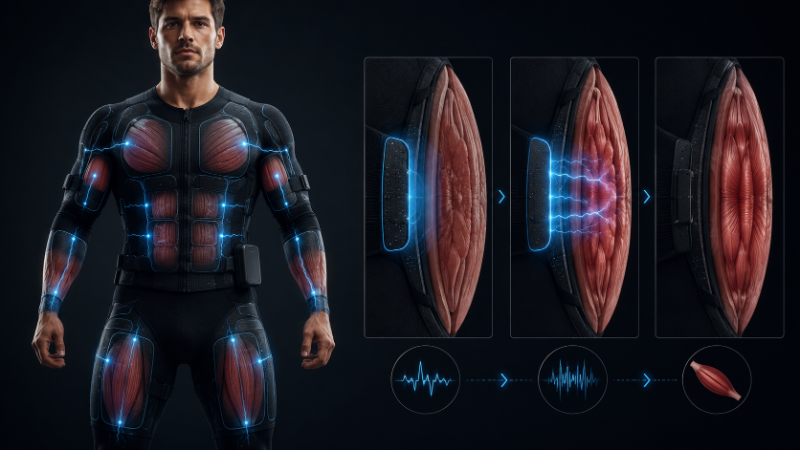
EMS training uses controlled electrical impulses to make muscles contract while I perform simple movements. It can support strength, muscle activation, and time-efficient workouts, but it should not replace all normal exercise, good nutrition, or professional guidance.
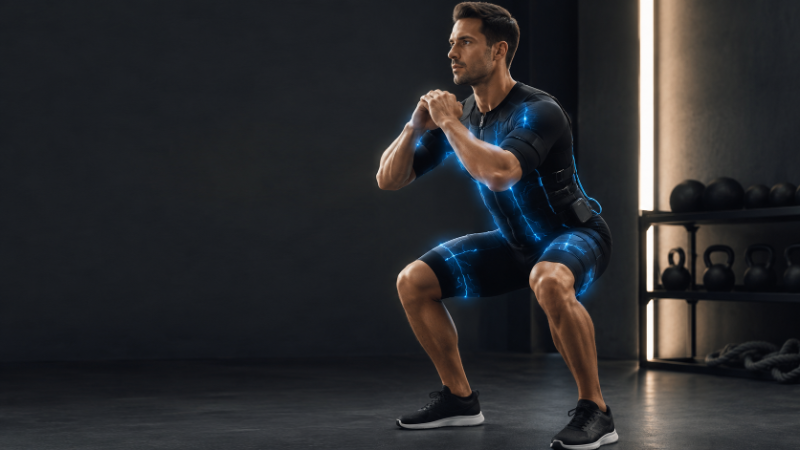
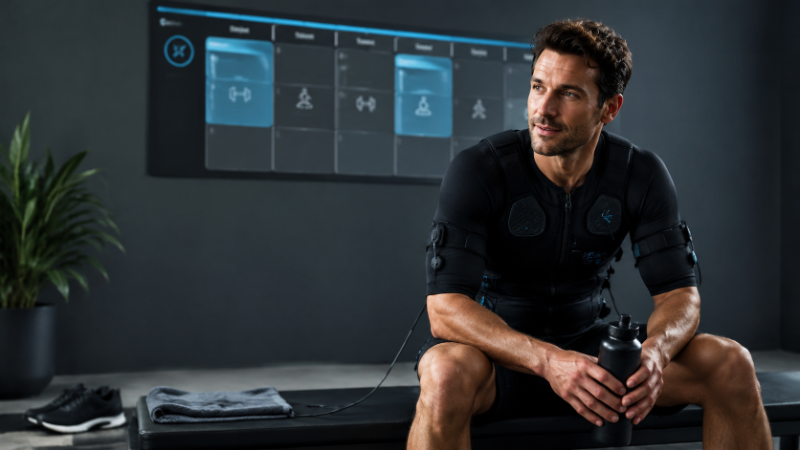
I like to explain EMS training in a simple way. My body already uses electrical signals to move. My brain sends signals through nerves. My muscles receive those signals and contract. EMS training adds outside electrical impulses through electrodes placed on a suit or pads. These impulses help activate more muscle fibers while I squat, lunge, press, or hold controlled positions.
This is why EMS training feels different from a normal workout. I am not just moving by myself. The device is also asking my muscles to contract at the same time. That does not make the workout magic. It makes the workout more focused. It also means the setup, intensity, software control, suit quality, and trainer guidance all matter.
For safety, I always treat EMS as serious training. The U.S. FDA explains that electronic muscle stimulators are regulated devices, and it also warns that unregulated products can cause problems like burns, shocks, skin irritation, and pain. So I never look at EMS as a cheap gadget topic. I look at it as fitness technology that needs proper design, correct use, and clear user instructions.
What Is 20 Minutes of EMS Training Equivalent To?
Many people hear that 20 minutes of EMS equals hours in the gym. That claim sounds attractive, but it can also be misleading.
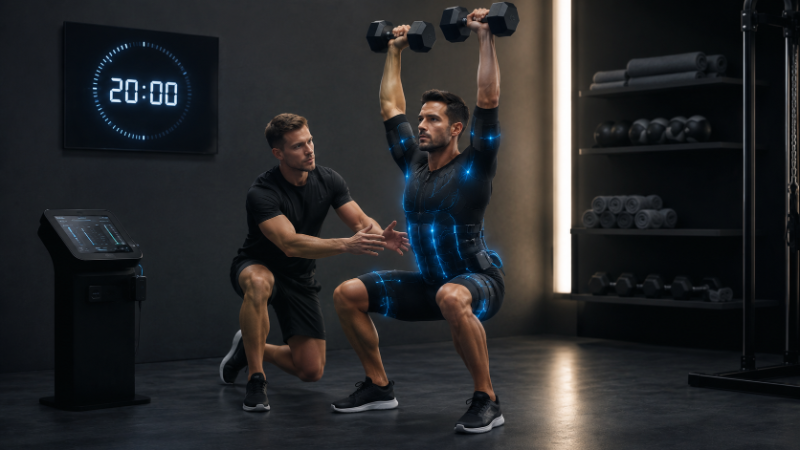
A 20-minute EMS session can feel like a longer full-body strength session because many muscles work at the same time. But I would not say it always equals two or three hours of normal gym training.
I think the better question is not “How many hours does EMS replace?” The better question is “What kind of training effect does EMS create in a short time?” EMS can activate several large muscle groups at once. In a normal gym session, I may train legs, then chest, then back, then core. With a full-body EMS suit, I can stimulate many of these areas during the same basic movement pattern.
That is why a 20-minute session can feel intense. The time is short, but the muscle demand is high. Still, EMS does not copy every benefit of a long gym session. It does not fully replace skill work, heavy lifting practice, aerobic conditioning, mobility training, or sport movement. It is better to see it as a high-density training tool.
How I Compare EMS Time With Gym Time
| Training Type | What I Usually Get | What EMS Can Add |
|---|---|---|
| Traditional strength training | Load, movement skill, progressive overload | Extra muscle activation |
| Cardio training | Heart and lung conditioning | Some effort, but not a full cardio replacement |
| Mobility training | Joint control and range of motion | Limited direct benefit |
| EMS training | Time-efficient muscle contraction | Full-body stimulation in a short session |
I would use the “20 minutes” message carefully on a business website. It is good for marketing, but it must be honest. I would say EMS is designed for people who want efficient training in less time. I would not promise that every 20-minute session equals a fixed number of gym hours. That kind of promise can reduce trust. For E-E-A-T, I prefer clear wording, safe claims, and a direct link to authority sources like the FDA EMS device page.
Does EMS Training Really Work?
Some people try EMS once and expect instant visible change. Then they feel disappointed. The real answer is more practical than that.
Yes, EMS training can work when it is used with correct intensity, safe equipment, proper movement, and a consistent plan. It works best as a training support tool, not as a miracle solution.
I see EMS training as a bridge between fitness, recovery, and smart equipment design. The electrical impulse can help the muscle contract. That contraction can create training stress. Training stress can lead to adaptation when I recover well. This is the basic idea. But the result still depends on normal fitness rules. I need consistency. I need enough effort. I need rest. I need good nutrition. I also need a safe plan.
EMS is often used in fitness studios, beauty and body-shaping centers, home training systems, and some rehabilitation-related settings. I would be careful with medical claims. I would not say EMS cures pain, fixes injury, or replaces therapy. I would say EMS may support muscle activation and strength training when used correctly.
What Makes EMS More Likely To Work?
| Factor | Why It Matters |
|---|---|
| Device quality | Stable output makes the session more controlled |
| Suit fit | Good electrode contact helps signal delivery |
| Intensity control | The session should be challenging but tolerable |
| Trainer guidance | A coach helps prevent overuse and bad form |
| Training plan | Progress needs structure, not random sessions |
| Recovery | Strong stimulation still needs rest |
In my view, the equipment side is easy to underestimate. A weak suit, poor cables, bad electrode contact, or unstable software can make EMS feel uneven. This is why a professional EMS supplier should focus on product design, control systems, material quality, and testing. For example, Loksource focuses on dry EMS suits, wet EMS suits, device boxes, software connection, and OEM/ODM support. That matters because business buyers do not only buy a suit. They buy a full training experience for their users.
For public health balance, I also connect EMS content with general exercise guidance. The CDC recommends adults do both aerobic activity and muscle-strengthening activity. EMS may help with the muscle-strengthening side, but I still believe a complete routine should include walking, cycling, swimming, or other heart-focused movement.
How Much Does EMS Training Cost?
EMS training looks simple from the outside. But the price can feel high when people compare it with a normal gym membership.
EMS training cost depends on the country, studio model, trainer support, suit system, and session package. In many markets, guided EMS is priced higher than basic gym access because it uses equipment and coaching.
I usually divide EMS cost into two sides. The first side is the consumer side. A user pays for studio sessions, private training, or home equipment. The second side is the business side. A gym, salon, distributor, or rehabilitation center pays for EMS suits, boxes, software, samples, spare parts, and branding.
For consumers, one-on-one EMS sessions often cost more than normal group fitness classes. This makes sense because the studio needs devices, suits, cleaning, setup time, and trained staff. Some users buy packages, so the per-session price becomes lower. Home EMS systems may have a higher starting cost, but they can reduce long-term visit costs if the user trains often.
How I Would Think About EMS Cost
| Buyer Type | Main Cost | What I Would Check |
|---|---|---|
| Fitness user | Session fee or home device | Trainer quality and safety |
| EMS studio | Full equipment system | Durability and after-sales support |
| Distributor | Bulk order and branding | OEM/ODM ability and lead time |
| Beauty center | Suits and client experience | Comfort, hygiene, and easy operation |
| Rehab-related buyer | Control and safety | Professional use limits and clear instructions |
For a business buyer, I would not choose the cheapest EMS system first. I would check the supplier’s history, product categories, certification support, and customization ability. Loksource was founded in China in 2017 and has focused on EMS training equipment and apparel for years. Its dry EMS suits and wet EMS suits serve different use cases. Dry suits can fit home training or beginner users. Wet suits can be more suitable for studios, gyms, beauty centers, and professional environments where stronger contact is needed.
Cost should also include hidden items. I would ask about sample fees, MOQ, packaging, logo customization, software support, spare cables, battery box details, charging method, warranty, and shipping. A lower unit price can become expensive if the product fails often or support is slow. A higher-quality OEM/ODM EMS partner can help a brand save money over time because fewer problems happen after launch.
How Many Times a Week Should You Do EMS Training?
Some beginners want fast results, so they want EMS every day. I think that is the wrong starting point.
Most people should start EMS training once or twice per week, with rest between sessions. The best frequency depends on fitness level, intensity, recovery, and professional advice.
EMS training may be short, but it can still be intense. I would not treat it like light stretching. When the muscles contract strongly, they need recovery. If I push the intensity too high and train too often, I may feel heavy soreness. I may also reduce performance in my next session. So I prefer a conservative start.
A beginner can start with one session per week. After the body adapts, two sessions per week may work for many healthy users. Advanced users may combine EMS with normal strength training, cardio, and mobility work. But they should still avoid stacking too much high-intensity work in the same week.
A Simple Weekly EMS Plan
| User Level | EMS Frequency | Other Training |
|---|---|---|
| Beginner | 1 time per week | Walking and light mobility |
| General fitness user | 1–2 times per week | Cardio and basic strength work |
| Busy professional | 1–2 times per week | Short walks on non-EMS days |
| Advanced user | 2 times per week if recovered | Structured gym or sport training |
| Rehab-related user | Only under professional guidance | Follow clinical advice |
I would also use the CDC guideline as a frame. The CDC says adults need at least 150 minutes of moderate-intensity activity per week, or 75 minutes of vigorous activity, plus muscle-strengthening activity on two or more days. EMS may help with the strength part, but it does not remove the need for daily movement. I still want walking, stairs, cycling, or other simple activity in the week.
From an equipment business view, frequency affects product design. If a studio uses EMS suits many times per day, durability matters more. If a home user trains once per week, comfort and easy setup may matter more. If a distributor sells to gyms, the system should be easy to clean, stable, and simple for trainers to control. This is why I like EMS systems that include reliable suits, device boxes, and software connection. The user sees a 20-minute session. The business owner sees the full operation behind that session.
Conclusion
EMS training can be useful when I use it with clear goals, safe equipment, honest expectations, and a balanced weekly fitness plan.